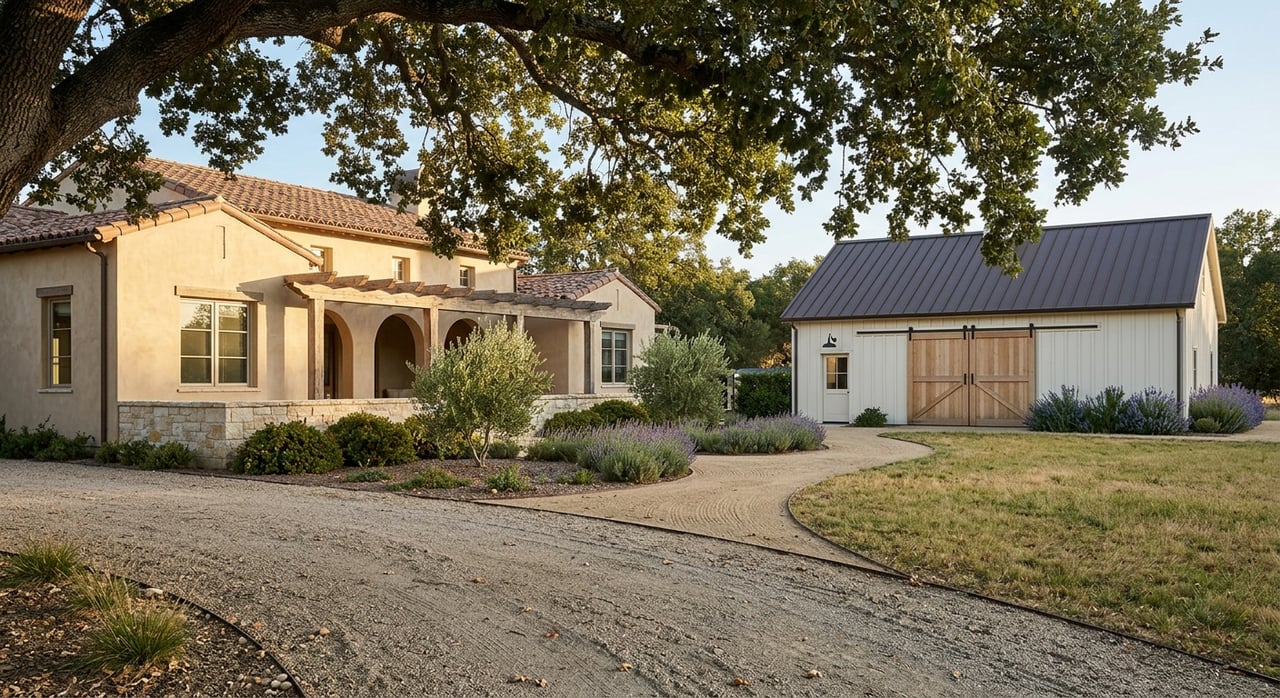
If you picture more space, more privacy, and the option to keep horses or build out a true lifestyle property, Loomis is probably already on your radar. For many buyers, it offers a rare middle ground: a small-town, semi-rural setting that still keeps you connected to everyday services in South Placer County. If you are wondering whether estate or equestrian living in Loomis really fits your goals, this guide will help you weigh the lifestyle, the property types, and the practical details that matter most. Let’s dive in.
Why Loomis attracts acreage buyers
Loomis has a distinct identity that helps explain its appeal. The town notes that it incorporated in 1984 in part to preserve local control and its small-town character, and the Census Bureau estimate listed on the town site places the 2024 population at 6,939. That scale can be a big draw if you want a quieter setting than a typical suburban subdivision.
At the same time, Loomis is not cut off from daily convenience. According to the town, you will still find local parks, shared-use recreation space, and on-demand transit connections serving the Rocklin, Loomis, and Roseville network. That balance is a big reason buyers look here when they want room to breathe without feeling remote.
For more local context, the Town of Loomis overview and its parks and recreation information help show why the area feels both grounded and accessible.
What estate living means in Loomis
In Loomis, “estate living” is not just a marketing phrase. The town’s zoning framework includes several low-density residential categories that support larger parcels and lower-density housing patterns than you would typically find in a standard neighborhood.
The most relevant zoning districts for acreage buyers are RA (Residential Agricultural), RE (Residential Estate), and RR (Rural Residential). Based on the town’s zoning revisions, RA is intended for agricultural uses and very low-density homes, RE is for large-lot single-family homes with similar agricultural uses, and RR is for large-lot homes where large animals are allowed only on parcels of one acre or more.
The maximum densities listed by the town are:
- RA: 4.6 acres per dwelling unit
- RE: 2.3 acres per dwelling unit
- RR: 1 acre per dwelling unit
That structure matters because it shows Loomis is not one-size-fits-all. Some areas align more with ranchettes or estate-style properties, while others are closer to conventional residential living. You can review those definitions in the town’s 2024 housing and zoning revisions.
What equestrian living can look like
If your goal is horse property, Loomis has rules that make the equestrian conversation more concrete. The zoning standards specifically address horses and cows, setting a minimum lot area of 1 acre for those uses. That gives buyers an important starting point when asking how much land they may need.
The code also sets setback requirements for barns, shelters, pens, and similar concentrated-confinement areas. Those structures must maintain 25-foot side and rear setbacks and 50-foot setbacks from streets and dwellings. In practical terms, that means raw lot size is only part of the equation. The layout and usable footprint of the parcel matter too.
Loomis also defines an equestrian facility as a commercial horse-related use such as a boarding stable, riding school, or horse exhibition facility, along with accessory barns, stables, corrals, and paddocks. For buyers focused on personal use, this is still useful context because it shows the town directly contemplates horse-related property improvements in its code.
Can you add a barn or outbuilding?
Potentially, yes, but you should never assume before verifying the parcel and zoning. The town allows agricultural accessory structures on RA, RE, or RR sites that are 1 acre or larger, including barns used for animal confinement or for storing farm equipment and supplies.
That is one of the strongest indicators that Loomis can support true horse-property living, not just oversized backyards. Still, every property is different, and local rules around siting, grading, and permitting can affect what is realistic.
This is especially important if you are planning a barn, paddock area, riding space, fencing plan, or other custom improvements after closing. A property may feel ideal at first glance, but the details of access, setbacks, terrain, and permits can shape what you can actually build.
The lifestyle upside of Loomis acreage
For the right buyer, the appeal is easy to understand. Estate and equestrian living in Loomis often means more privacy, more separation between homes, and more flexibility for outbuildings, animals, or hobby agriculture.
You may also appreciate that the town still offers a sense of community life. Public amenities like parks, recreation space, and transit connections help support day-to-day routines, even if your home itself feels more tucked away. That is a different experience from both dense suburban neighborhoods and truly remote rural areas.
If your ideal home includes elbow room and a more open setting, Loomis can offer a compelling blend of lifestyle and practicality.
The tradeoffs to think through
Acreage living is not the same as low-maintenance suburban living. If you are drawn to Loomis for space and flexibility, it is just as important to understand the added responsibilities that can come with that choice.
For example, the town’s Public Works guidance says grading over 50 cubic yards, grading within a riparian area, or clearing over 1 acre requires a grading permit. The town also notes that if drainage ditches or canals run through your property, the owner is responsible for maintaining them. You can review these details through the town’s Public Works information.
That means ownership can involve more active site management than you might expect in a typical subdivision. Depending on the parcel, your to-do list may include land maintenance, drainage awareness, and permit planning before you make any major changes.
Verify utilities early
One of the most important steps with any estate or horse-property purchase is verifying utilities at the start of your search. Loomis directs new residents to PCWA for water hookups, SPMUD for sewer service, PG&E for power, and Recology for trash service.
That matters because rural-feeling properties can vary more than homes in a newer tract development. Service connections, system locations, and maintenance responsibilities may not look the same from one parcel to the next.
The town’s new residents page is a helpful starting point, but parcel-specific confirmation is still essential before you move forward.
Wildfire should be part of your decision
Wildfire preparation is another major part of due diligence in Loomis. The town states that Loomis includes Moderate and High Fire Hazard Severity Zones, with no Very High zones identified there. For properties in High zones, the town says defensible space, hazard inspection and disclosure, and ignition-resistant construction standards can apply for certain new buildings and remodels.
If you are considering acreage, this should be part of your budget and lifestyle planning from day one. Land, fencing, outbuildings, and vegetation all add to the maintenance profile of a property, and fire preparedness may affect how you manage the site over time.
You can learn more through the town’s fire hazard severity zone page.
Is Loomis right for you?
Loomis may be a strong fit if you want a semi-rural lifestyle with room for animals, outbuildings, or simply more space around you. It can also make sense if you value a small-town identity but still want access to nearby services and regional connections.
It may be a less natural fit if your priority is simple, low-maintenance ownership with minimal land oversight. The same features that make acreage living attractive can also bring more planning, more upkeep, and more verification before you buy.
The key is matching the property to the way you actually want to live. If you are considering estate or equestrian living in Loomis, working with an agent who understands acreage, zoning questions, and parcel-level due diligence can help you move forward with clarity and confidence.
Whether you are exploring your first horse property or searching for a refined estate with room to grow, Mercedeh Sheik offers white-glove guidance backed by strong local knowledge and personalized service. If you want help evaluating Loomis acreage, estate homes, or land opportunities, schedule a private consultation.
FAQs
How much land do you need for horses in Loomis?
- Loomis zoning standards set a 1-acre minimum lot area for horses and cows, and RR zoning also starts at 1 acre per dwelling unit, but you should still verify parcel layout and setbacks before assuming a property will work.
Can you build a barn on a Loomis estate property?
- Potentially yes. The town allows agricultural accessory structures, including barns, on RA, RE, or RR parcels of 1 acre or larger, subject to zoning, setbacks, and any applicable permit requirements.
Are all Loomis homes estate or equestrian properties?
- No. Loomis includes lower-density acreage-oriented districts like RA, RE, and RR, but it also has more conventional residential zoning districts, so the housing stock varies.
What utility services should you verify before buying in Loomis?
- You should confirm water, sewer, power, and trash service early. The town points new residents to PCWA, SPMUD, PG&E, and Recology, but service details should be checked parcel by parcel.
Do Loomis acreage properties have wildfire considerations?
- Yes. The town states that Loomis includes Moderate and High Fire Hazard Severity Zones, and some properties may require defensible space, disclosures, inspections, or ignition-resistant construction standards depending on location and project scope.