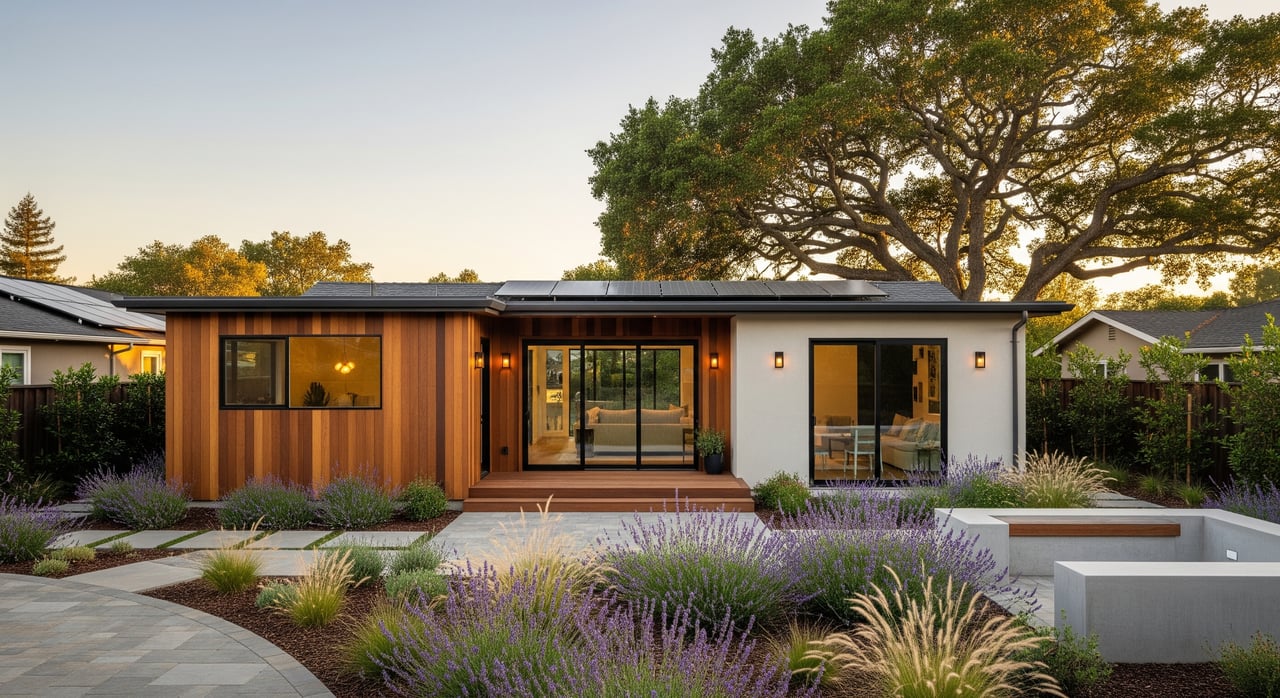
Thinking about adding an ADU in Davis to house family or generate rental income? You are not alone. With strong demand near UC Davis and evolving state rules that make ADUs easier to approve, many homeowners are exploring this path. In this guide, you will learn how the rules work, what costs to expect, how to estimate returns, and the steps to move forward with confidence. Let’s dive in.
ADU basics in California and Davis
An accessory dwelling unit is a self-contained home on the same lot as your primary residence. A junior ADU is a smaller unit, often created by converting existing space, typically up to about 500 square feet. California law encourages both, but Davis still applies local objective standards.
State law requires ministerial approval for ADUs that meet objective criteria. That means your application should be processed without discretionary hearings if your plans align with the rules. State rules also limit certain impact fees for smaller ADUs and set boundaries around parking and owner-occupancy requirements. Davis can still apply standards for height, setbacks, design, and safety, as long as those standards are objective and do not effectively block compliant ADUs.
What state law simplifies
- Ministerial approval when you meet objective standards, which speeds up entitlement.
- Limits on some impact or connection fees, often reducing or exempting fees for small ADUs around 750 square feet.
- Parking requirements are restricted in many situations, including locations near transit and other qualifying conditions under state law.
What Davis still controls
- Objective standards such as maximum size, height, setbacks, and lot coverage.
- Design review and neighborhood overlays that guide how your ADU looks and fits the site.
- Tree protections that may affect layout, trenching, or removal, which can add time and cost.
Where to start in Davis
Your first step is confirming whether your property is inside the City of Davis or in unincorporated Yolo County. City parcels follow City of Davis rules. Parcels outside city limits follow Yolo County rules. From there, schedule a pre-application conversation with planning staff to flag any overlays, easements, or tree protections that might shape your design.
Site and zoning checks
- Zoning district: R-1 and other zones have different standards and allowances.
- Unit size: jurisdictions often cap detached ADUs up to about 1,200 square feet and JADUs around 500 square feet. Confirm current Davis limits for your lot.
- Height and setbacks: detached units usually face lower height caps than the main home and must respect side and rear setbacks.
- Lot coverage and floor area: verify how an ADU affects overall lot coverage and impervious surface limits.
- Conversions: garage, accessory building, and interior conversions are often allowed with their own standards.
- Number of units: many parcels can accommodate one ADU and one JADU. Confirm what is allowed for your address.
Parking, access, fire, and utilities
- Parking: state law limits how much parking can be required. Some properties qualify for no additional parking depending on proximity to transit and other factors.
- Access and fire separation: ensure the design meets fire code access, separations from property lines, and safe egress.
- Utilities: most Davis parcels are on municipal water and sewer. If you are on septic, feasibility and costs change significantly and may require a system upgrade.
- Metering: some projects share meters while others add separate meters, which can change upfront costs and ongoing billing.
- Stormwater and drainage: new structures must meet local stormwater rules.
Fees and occupancy rules
- Plan check, building permit, and inspection fees apply.
- Impact and capacity fees may be reduced or waived for smaller ADUs, commonly under about 750 square feet. Larger units usually pay standard rates.
- Rentals and occupancy: confirm whether any owner-occupancy or short-term rental restrictions apply before you plan a rental strategy.
What an ADU costs in Davis
Costs vary based on size, site conditions, utilities, and finishes. Davis often trends toward the higher end of statewide ranges due to regional labor and material costs. Utility connections, trenching, and tree mitigation can significantly affect budgets.
Typical construction cost ranges
- JADU conversion, up to about 500 sq ft: roughly $20,000 to $80,000, depending on upgrades to systems and finishes.
- Attached ADU or garage conversion, 300 to 800 sq ft: roughly $80,000 to $250,000.
- Detached ADU, 500 to 1,200+ sq ft: roughly $150,000 to $450,000 or more for complex sites or premium finishes.
These are broad ranges. Site work, foundation requirements, utility runs, and overlays can add tens of thousands. Always secure multiple bids.
Soft costs and fees to expect
- Plan check, permits, and inspections.
- Impact and capacity fees for water and sewer where applicable.
- Architectural and engineering design, commonly 10 to 20 percent of construction cost.
- Utility trenching and meter work, often $5,000 to $50,000+ depending on distances and complexity.
- Site prep, foundation, grading, and tree protection or mitigation.
- Financing, appraisal, and escrow costs if you refinance.
- Property taxes typically increase because new construction is added to assessed value.
Financing your ADU
- Cash: simplest and lowest financing cost.
- Home equity loan or HELOC: common for ADUs with quicker approvals than construction loans.
- Cash-out refinance: converts equity into funds for construction, useful when rates and terms align.
- Construction or construction-to-perm loans: suited for larger projects; requires builder contracts and draws.
- FHA, Fannie Mae, and Freddie Mac programs: some products allow ADU construction costs to be financed with a primary mortgage. Lender guidelines vary.
- Grants or low-interest loans for affordable ADUs: availability changes and often includes income or rent restrictions. Verify current programs before relying on them.
Timelines and process
ADU projects move faster than many additions, but they still take time. How fast you finish depends on your site, your team, and how complete your initial plans are.
- Pre-application and feasibility: 2 to 6 weeks to confirm jurisdiction, gather utility data, and flag constraints.
- Design and permit drawings: 4 to 12+ weeks for architectural plans and engineering.
- Permit review: 2 to 12 weeks for ministerial planning and building review when compliant.
- Construction: 3 to 9+ months depending on size, complexity, and contractor availability.
- Overall timeline: about 6 months for a straightforward conversion to 18+ months for a detached ADU with significant site work.
Common causes of delay include utility trenching in public rights-of-way, tree protection and mitigation, unexpected soil or subgrade conditions, plan resubmittals after corrections, contractor schedules, and material lead times.
A simple plan to move forward
- Confirm city vs. county jurisdiction for your parcel.
- Review zoning for allowed ADU types and size.
- Schedule a pre-application conversation with planning staff.
- Order a site survey and locate utilities and easements.
- Check overlays, historic or design review triggers, and tree protections.
- Ask for current fee schedules, parking rules, and impact fee exemptions.
- Verify water and sewer service, and whether separate meters are required or optional.
- Confirm if the parcel is in a floodplain or higher fire-risk area.
- Gather bids from experienced ADU designers and contractors.
Rental income and ROI basics
ADU returns come from two places: added property value and rental income. Davis has steady rental demand and seasonal patterns related to UC Davis, which can support occupancy for well-located, well-designed units. Your personal goals matter too. Some owners prioritize housing for family or future flexibility over pure returns.
When you model rental income, use current local listings for studios and one- or two-bedroom units as a guide. Consider who you want to rent to and whether you will allow pets, include utilities, or provide furnishings. Short-term rental rules can change, so confirm any requirements before counting on nightly rates.
A simple ROI calculation
Start with a ballpark. Suppose your ADU costs $250,000 and you rent it for $2,000 per month. That is $24,000 per year in gross rent.
- Gross yield: $24,000 divided by $250,000 equals 9.6 percent.
- Operating costs: for small rentals, 20 to 40 percent of gross rent is a common rule of thumb for expenses, excluding mortgage payments. If you assume 30 percent, your net operating income is $16,800.
- Cap rate: $16,800 divided by $250,000 equals about 6.7 percent.
- Payback period: if you have financing, subtract annual debt service from your NOI to estimate cash flow and then divide total cost by annual cash flow. Payback commonly ranges from 8 to 25 years depending on rents, costs, and loan terms.
For resale value, buyers and appraisers consider the income potential and the quality of the build. ADUs usually increase a property’s value, but not always dollar-for-dollar compared with construction cost. The local sales market, unit design, and permitting status all matter.
Non-financial benefits and risks
Benefits:
- Flexibility for multigenerational living or a caregiver.
- Supplemental income to offset your mortgage.
- Ability to offer more affordable rental options by choice.
Risks and caveats:
- Rental rates and occupancy can shift with local economic trends and university enrollment patterns.
- Regulations for rentals or fees can change over time.
- Construction surprises, utility conflicts, and tree constraints can increase costs.
- Poorly integrated or noncompliant ADUs can hurt resale appeal.
Davis-specific tips for landlords
- Plan for seasonal leasing. Student demand often peaks before fall term, so align construction and marketing timelines accordingly.
- Determine whether you want long-term or short-term rentals. Rules differ and affect cash flow, turnover, and compliance.
- Budget conservatively for operating costs. If you pay utilities, include them in your model and consider separate metering if allowed.
- Keep documentation. Permits, inspections, and final approvals add value at resale and simplify lending and insurance.
Is an ADU right for you?
If you want long-term flexibility and potential income, an ADU can be a smart addition. The strongest outcomes come from careful planning, accurate cost estimates, and realistic rent or family-use expectations. Start with your goals, confirm your site’s constraints, and build a budget that includes soft costs and contingencies. With a solid plan, you can create a compliant, attractive unit that fits your property and your life.
If you would like help weighing ADU value for resale, sourcing market rent comparables, or positioning a Davis home with an existing ADU for buyers, connect with Mercedeh Sheik to discuss next steps.
FAQs
How long does an ADU take in Davis from first call to move-in?
- Expect about 6 months for a simple conversion and up to 18+ months for a detached unit with site work. Design, permits, utilities, and contractor schedules drive timing.
Do I need to provide on-site parking for an ADU in Davis?
- State law limits when cities can require parking for ADUs, and many properties qualify for reduced or no new spaces depending on transit and other factors; verify requirements for your parcel.
Can I rent a Davis ADU short-term on platforms like Airbnb?
- Short-term rentals are regulated locally and rules can change, so confirm the City of Davis requirements and any registration or occupancy limits before planning STR income.
Will I need a separate water or electric meter for my ADU?
- It depends on local policies and your design; separate meters can increase upfront cost but simplify billing, so discuss options with the city and your designer early.
Will an ADU increase my home value more than it costs to build?
- Not always; ADUs typically add value and market appeal, but resale premiums vary and often do not match full construction cost, so model both rental income and expected value impacts.
Are there grants or incentives to help fund a Davis ADU?
- Some programs offer low-interest loans or grants for ADUs with affordability commitments; availability changes and often includes eligibility requirements, so verify current options before you budget.